
The new version strengthens email security for SMB companies at a time when infected emails account for 59% of ransomware infections
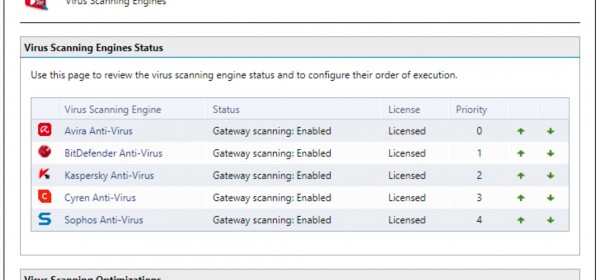
PRAGUE, 20 November 2017 – GFI Software, a provider of enterprise network security solutions, has released a new version of GFI MailEssentials 21, an email server security solution. The new version includes the new Cyren and Sophos antivirus engines, which improve the ability to identify and prevent attacks on enterprise networks through infected email messages, thereby better protecting the infrastructure of small and medium-sized businesses (SMBs).
In addition, in the new version, the Avira antivirus engine has replaced VIPRE as the default antivirus engine, Cyren antivirus has been integrated as a new engine, while Sophos replaces McAfee. In addition to enhanced antivirus capabilities, the new version of GFI MailEssentials offers a broader range of anti-spam filters, providing up to 99% effectiveness with zero false positives.
“According to a recent GFI Software report, 59% of ransomware infections in companies and organizations are caused by emails, while ransomware is contained in up to 40% of spam messages,” said Zdeněk Bínek, responsible for sales of GFI Software solutions in the Czech Republic and Slovakia. “Defending against growing threats using only antivirus software on client workstations and leaving the decision to users is not prudent; businesses need to filter out dangerous emails before they reach the inbox. The new GFI MailEssentials, installed on the email server, can stop both annoying spam and malware infections and eliminate risks posed by careless users.”
GFI MailEssentials is an SMB business email security solution that includes powerful anti-spam features, up to 5 antivirus engines, and a scanner for zero-day vulnerabilities. It also includes an advanced content filtering function that makes it possible to filter incoming, outgoing, and internal emails for information such as payment card numbers, both in the email body and its attachments, thereby preventing sensitive data leaks.
Article author: ZEBR.ai editorial team