
GFI Software: 85% of Czech SMBs underestimate software updates
The risk of attacks on corporate networks is increased primarily by outdated applications
PRAGUE, April 6, 2016 – GFI Software, a provider of security solutions for corporate networks, has published the results of its local survey focused on software updates. According to the survey, up to 85% of Czech SMBs underestimate software updates, and only 15% report no issues related to patch management. Most companies have Microsoft software updates, typically Windows or Office, well covered, but underestimate the “patching” of third-party software, typically Adobe, Google, or Mozilla.
According to the National Vulnerability Database, which tracks global vulnerabilities in software systems, applications have long been the most vulnerable, many times more so than operating systems or hardware systems. The most vulnerable applications include web browsers, Java, and free Adobe applications such as Flash Player, Reader, Shockwave Player, and AIR. It is precisely this software that hackers focus on as they attempt to attack computers and corporate networks through security vulnerabilities.
Key findings of the local survey:
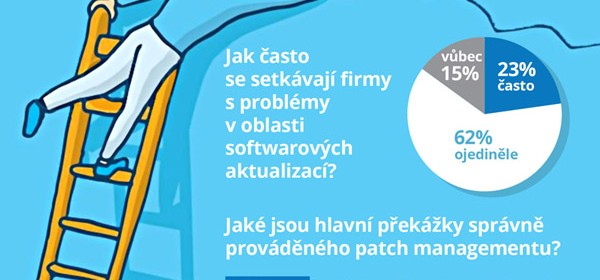
- 23% of Czech SMB companies frequently encounter issues caused by insufficient software updates, 62% encounter them occasionally, and 15% of companies do not encounter them at all;
- The main obstacles to properly implemented patch management in companies are insufficient awareness of the issue (54%), concerns that something will stop working after an update (46%), and the high cost of specialized tools (41%);
- For patch management, customers primarily use WSUS (46%) and Windows Update (43%) services
“Where automated updates work well, such as with operating systems, the level of vulnerability is lower,” said Zdeněk Bínek, responsible for sales of GFI Software solutions in the Czech Republic and Slovakia. “The problem arises with third-party applications, where users often reject an update manually, thereby exposing their computer and the entire corporate network to potential attacks. The solution is centralized tools that can both assess infrastructure vulnerability using simulated attacks and enable administrators to automatically install updates on individual computers without requiring user intervention.”
Article author: ZEBR.ai editorial team