
The importance of corporate email has increased significantly in the current situation
PRAGUE, October 26, 2020 – GFI Software, a provider of security solutions for enterprise networks, stated that remote work significantly increases the importance of corporate email communication, as well as the potential damage caused by its outage. Organizations should therefore strengthen their email with multi-layered protection to minimize the risks arising from email attacks on their mail infrastructure or corporate networks.
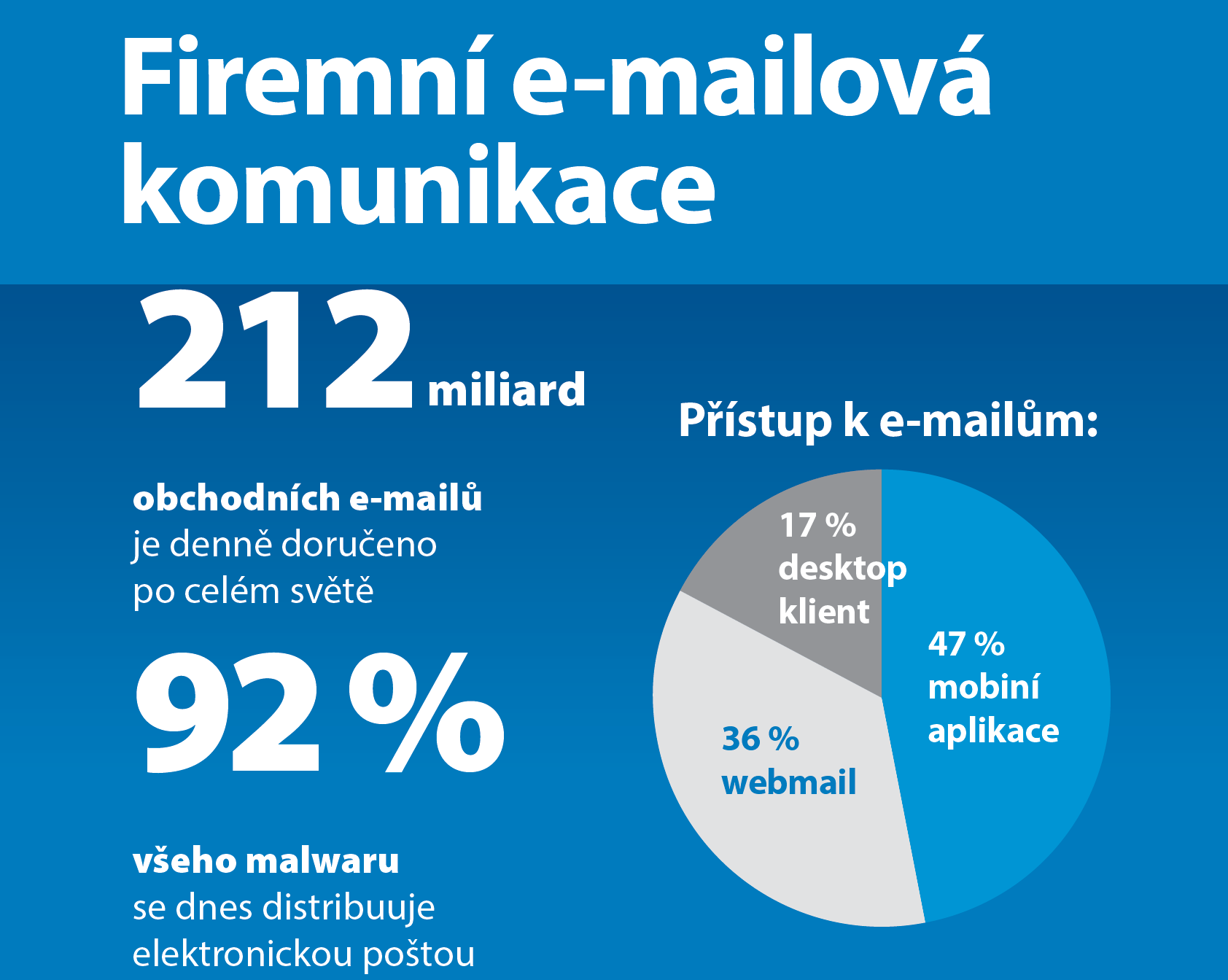
Email is the number one platform for business communication – 212 billion business emails are delivered every day, with 91% of users checking their inbox daily. According to GFI Software, 47% of them currently access their inbox via an app on a mobile phone or tablet, 36% via webmail, and 17% through desktop applications. Today, 92% of all malware is distributed by email, and 48% of organizations have already experienced phishing attacks.
“When people think of an email attack, they most often imagine phishing or spam containing links leading to infected websites,” said Jozef Kačala, Sales Engineer for EMEA and APAC at GFI Software. “However, organizations today face many other types, such as adware, scareware, man-in-the-middle, and Denial of Service (DoS). DoS attacks, for example, can lead to mail server overload and make business communication impossible, which may have fatal consequences for an organization’s business continuity.”
The main targets of attackers are usually corporate data, mailing lists, customer lists, sensitive personal data, product roadmaps, financial details, and any information they can monetize – whether by selling it or through extortion. However, they can also exploit a mail server to distribute email attacks that result in the server being blocked and email communication being disrupted. This is why multi-layered email protection is necessary.
Before being delivered to an inbox, an email should pass through several levels of protection:
- SMTP level – during transfer, IP and IP DNS blocklists, greylisting, and protection against directory harvesting can be used to determine whether an incoming email poses a risk. Outgoing emails should similarly be checked to ensure that the mail server is not placed on blocklists.
- Antivirus engines – to filter out emails containing viruses
- Content filtering – to filter out unwanted content in an email or its attachment
- Anti-spam engines – including anti-phishing, anti-spoofing, and other filters, including both passive and active filters using up-to-date online databases.
GFI Software offers both on-premises and cloud versions of email protection. The on-premises GFI MailEssentials solution is software installed at the mail server level that filters emails using anti-spam protection and five antivirus engines. The cloud solution, GFI MailSecurity, is an easy-to-use SaaS email security solution that scans all incoming email and blocks spam, emails containing viruses, and phishing attempts. It provides organizations with all the benefits of a cloud solution, including easy deployment, simple management, fast access through a web portal, and transparent costs.
Article author: ZEBR.ai editorial team