
MSPs are moving from antivirus tools to comprehensive EDR platforms that can withstand more sophisticated attacks and restore operations faster
PRAGUE, March 16, 2023 – ZEBRA SYSTEMS, a distributor of N-able solutions on the Czech and Slovak markets, announced that MSPs are increasingly preferring services built on Endpoint Detection and Response (EDR) solutions over standard antivirus service offerings. The main reason is the growing complexity of cyber threats and the need to use comprehensive tools to eliminate them.
In N-able's 2022 State of IT Security report, 82% of customers using MSP services said they perceived a clear increase in cyberattacks targeting their infrastructure. Meanwhile, 42% of attacks are carried out with the aim of deploying ransomware and subsequent financial extortion. However, the task of MSP providers is not to frighten their clients, but to expand their offerings with IT security services that minimize the risks of a successful attack.
One of the key trends is replacing standard antivirus solutions with more comprehensive endpoint protection tools (EDR), for a number of reasons:
- While antivirus protects against malware and viruses detectable through standard file scanning, EDR can also detect fileless attacks and malicious scripts outside the configured scanning window.
- Antivirus solutions traditionally rely on virus signatures, which means dependence on the antivirus vendor and also a certain delay before these signatures can be issued and updated. EDR continuously monitors current threats and alerts users to potential dangers in real time.
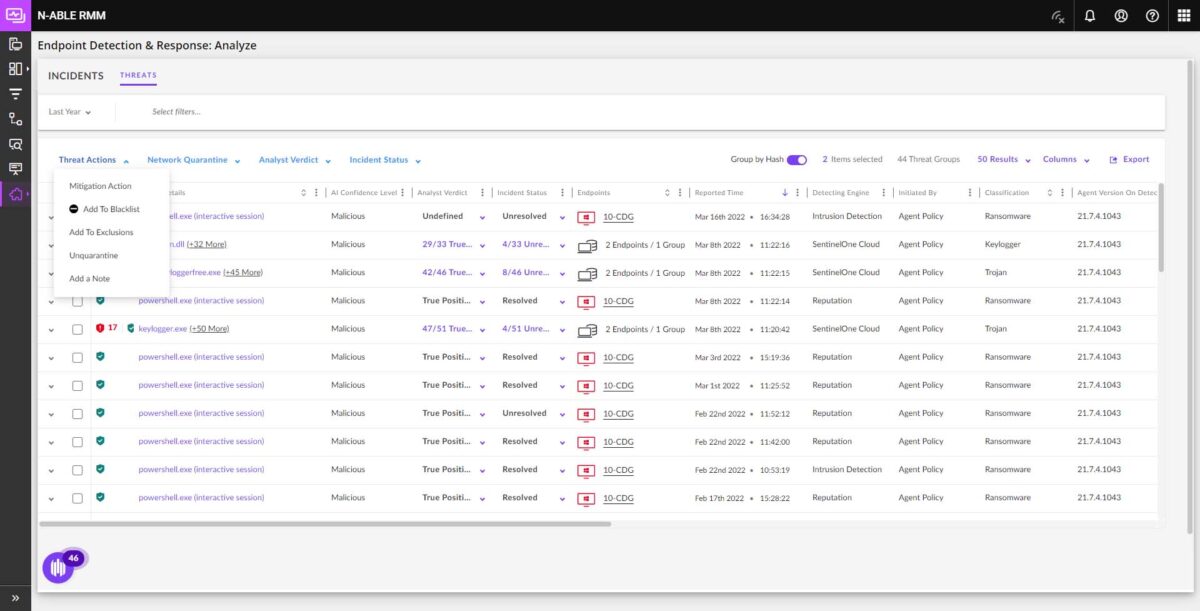
- While antivirus requires an administrator to regularly run scans and implement measures, EDR responds to potential threats automatically. Some solutions, such as N-able EDR, even make it possible to restore endpoints to their last safe state, thereby eliminating, for example, a ransomware attack.
- According to a Barracuda survey, restoring systems after an attack detected by antivirus takes an average of 3.5 hours. With an EDR solution, such remediation takes less than 30 minutes.
“EDR is becoming a natural evolutionary step beyond antivirus, primarily due to its broader capabilities for detecting suspicious activity and detailed analysis,” said Ondřej Šabata, Sales Engineer for N-able solutions at ZEBRA SYSTEMS. “The number of ways to bypass standard antivirus solutions continues to grow, as does the number of zero-day attacks that leave no time to update signatures. Under such circumstances, investing in an EDR solution more than pays off compared to the costs of a potential operational outage and system recovery.”
Click here for more information about N-able Endpoint Detection and Response (EDR), an endpoint protection solution. You can register here for the EDR webinar taking place on March 23.
Article author: ZEBR.ai editorial team